
Ndunyu Njeru Heritage · Vol. 24
A dairy of the plateau,
twenty-seven years on.
Kinangop Dairy began in 1999 as Mkulima Creameries — a small processor in Nyandarua County, founded by the late Livingstone Ndung’u Waithaka. The story since has been one of patient integration: of a brand to a place, of a processor to a co-operative, of a company to its catchment.
Photo · Sambaza2 · CC BY-SA 4.0
Year — 1999
Founding
The company was incorporated in 1999 as Mkulima Creameries Ltd — a Swahili name placing the farmer at the center of the enterprise. The founding intent was to give the smallholder dairy farmers of the Kinangop a route to a fair, reliable buyer for their milk, and to do the processing close to where the milk was produced.
The founder, the late Livingstone Ndung’u Waithaka, built the early operation around what would become its enduring premise: that the farmers, the cooperative and the processor should sit on the same side of the table.
Geography — Aberdares
The plateau
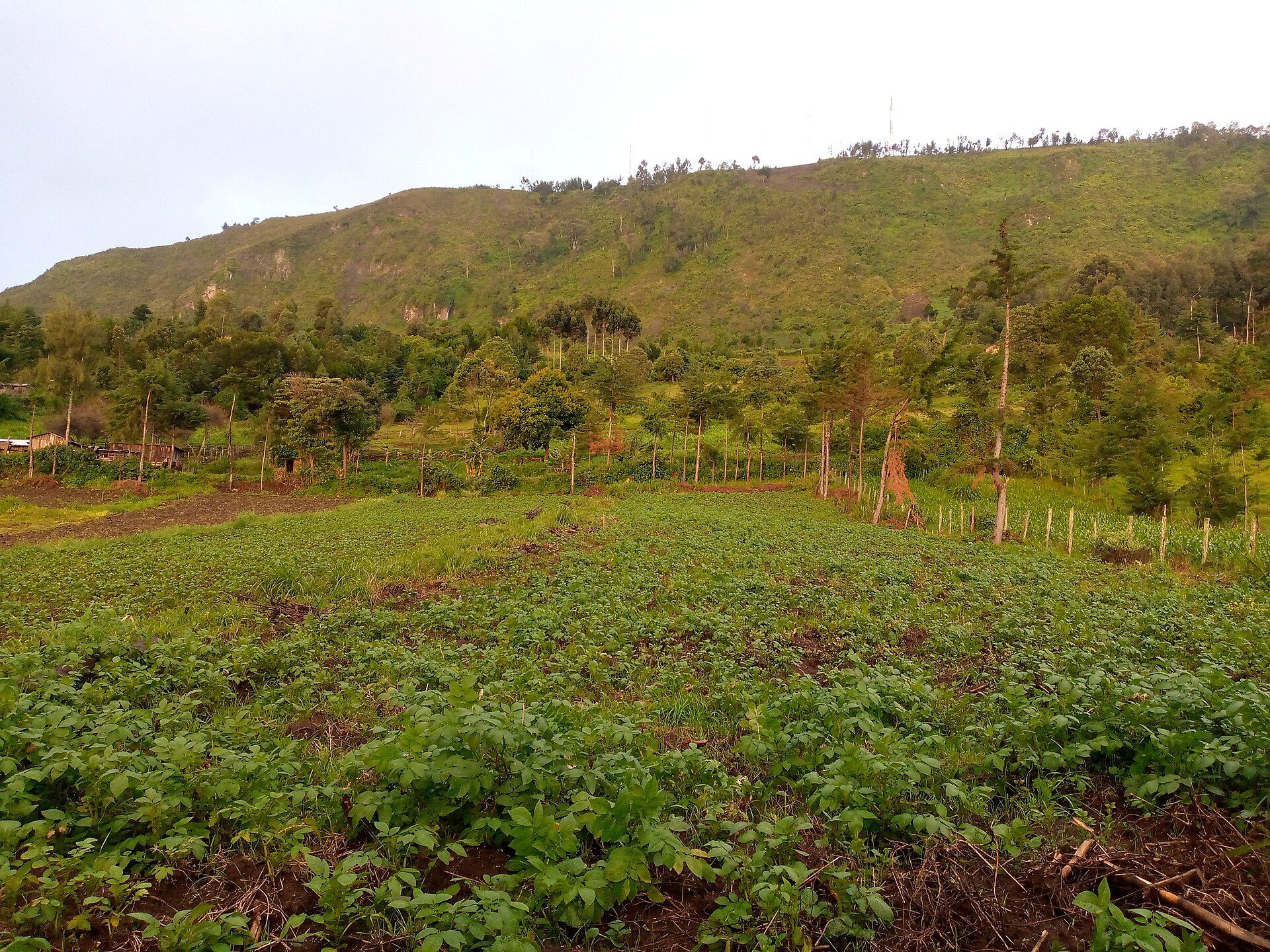
The Kinangop is a high, open shelf at the western foot of the Aberdare Range. It begins at around fifteen hundred metres above sea level, where cool air, year-round rainfall and grass that holds water like a sponge make a particular kind of dairy farming possible. Smallholders here have been keeping cattle for more than a century.
The processing plant sits at Ndunyu Njeru, a township on the Ol Kalou road — about a hundred and twenty kilometres north-west of Nairobi, and within a short collection radius of every farmer who supplies the company.
Year — 2006
Renaming
In 2006, the company took the name of the plateau itself — Kinangop Dairy Limited. The change was substantive, not cosmetic: it tied the brand to the landscape that supplied it and to the community of farmers who lived on that landscape, and made the relationship visible on every package that went out the door.
A dairy that was named for what it produced became a dairy named for where it came from. The change made the supply story public.
Year — May 2010
Own factory
The company’s own milk processing and packaging plant came on line in May 2010, at Ndunyu Njeru. The equipment was largely sourced from Denmark, a country with one of the world’s most refined dairy-engineering traditions, and the plant has run continuously since.
Owning the processing infrastructure removed a layer of intermediation between the farmer and the consumer. It allowed the company to set its own quality standards from the cooler at the farm gate through to the pouch in the supermarket — and to keep all of that within a single catchment.
Supply — MUKI
Co-operative integration
Almost every litre of milk that enters the Ndunyu Njeru plant is sourced through the MUKI Farmers Co-operative Society, a community of more than twenty-nine thousand smallholder farmers across the slopes of the Aberdares. Two sister entities — the MUKI SACCO, which lends to cooperative members, and the MUKI Investment Cooperative, which holds equity in the processor — close the loop.
The structure is unusual in East African dairy. Most processors negotiate with their suppliers across a counterparty boundary; here, the suppliers are also part-owners of the processor that buys from them. The full story sits with our farmers.
Year — 2026
Today
Twenty-seven years after Mkulima Creameries was incorporated, Kinangop Dairy operates three master brands — Kinangop, Kinangop Gold and 4US — across fresh milk, cultured Lala, yoghurt and long-life formats. The 2023 Kenya Dairy Industry Awards named the company Best Dairy Processor, and at the 2024 Kenya Beverage Excellence Awards the portfolio took podium positions in four consumer-voted categories on a single evening.
The work continues at Ndunyu Njeru, on the same shelf of high country it always has.
Read next
The story behind every litre.
Twenty-nine thousand farmers, three sister entities, one catchment. The MUKI cooperative is the half of the story this page only gestures at.