
Ndunyu Njeru Our Farmers · Vol. 24
Twenty-nine thousand
suppliers.
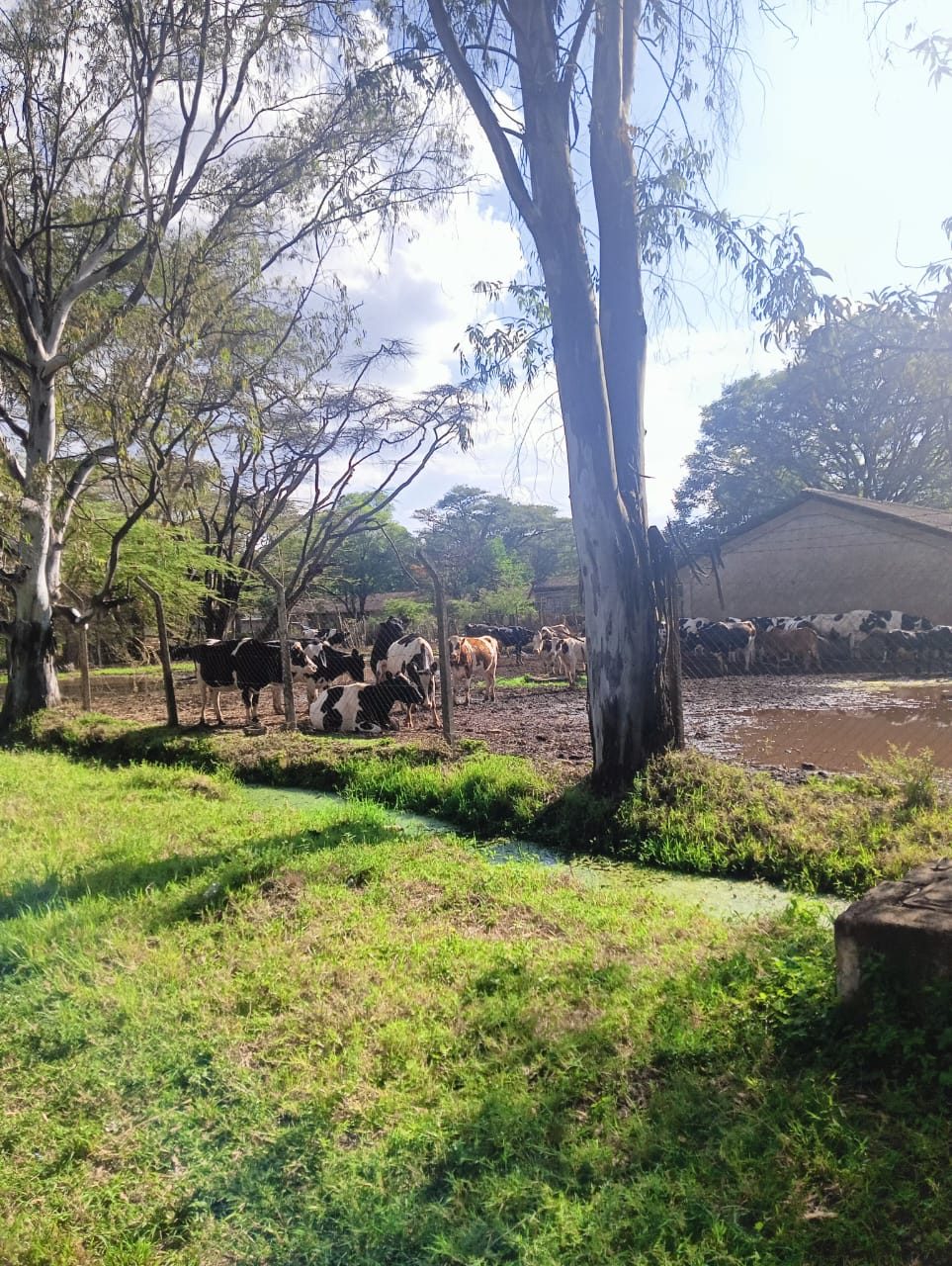
Every litre of milk that enters the Kinangop processing plant at Ndunyu Njeru is sourced from the MUKI Farmers Co-operative Society — a community of more than twenty-nine thousand smallholder farmers across the slopes of the Aberdares.
Photo · Tony0991 · CC BY-SA 4.0
Geography — The plateau
The catchment
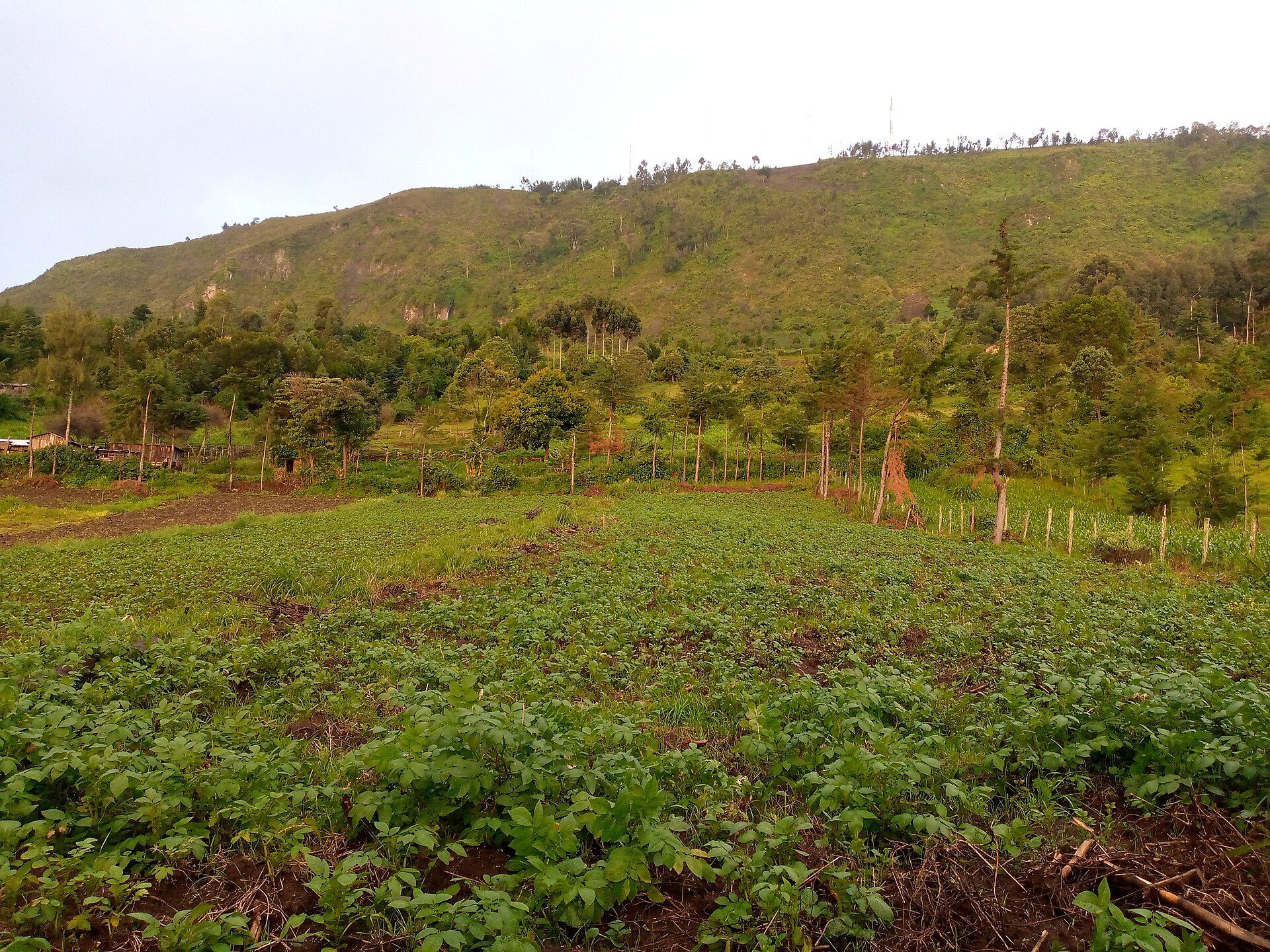
The catchment is geographically dense. It runs across the western slopes of the Aberdare Range and over the Kinangop plateau itself — the high, open shelf of farmland that begins at fifteen hundred metres above sea level and extends to the foot of the ridge.
Density matters: a tighter collection radius means less time on the road between the farm cooler and the plant, and that protects the quality of the milk before it ever reaches stainless steel.
Structure — The cooperative
MUKI Farmers Co-operative Society
The MUKI Farmers Co-operative Society is the supplier organisation. Membership is open to dairy farmers in the Kinangop catchment, and members deliver milk through a network of collection points operated by the cooperative.
The cooperative is the legal counterparty to Kinangop Dairy on the supply side. Pricing is negotiated at the cooperative level, on behalf of all its members, rather than farm-by-farm. That gives the smallholder farmer the bargaining power of a much larger entity.
Sister entity — The lender
MUKI SACCO
Alongside the cooperative sits the MUKI Savings and Credit Co-operative — a SACCO that lends to cooperative members. Loans funded through the SACCO support the capital expenditure of dairy farming: a cooler at the farm gate, a better dairy cow, fodder, veterinary care.
The presence of an aligned lender means a farmer’s payment for milk and a farmer’s loan for an upgraded cooler can be reconciled inside one institutional family, rather than negotiated across three.
Sister entity — The shareholder
MUKI Investment Cooperative
The third entity in the MUKI family is the MUKI Investment Cooperative, which holds equity in Kinangop Dairy itself. The cooperative members — the farmers — therefore have an indirect ownership interest in the processor that buys their milk.
The farmers own the cooperative. The cooperative owns equity in the processor. The processor buys from the farmers. End to end, on the same side of the table.
Programme — Support
Field extension & herd improvement
The cooperative-and-processor relationship is supported by a programme of field extension and herd improvement: agronomic guidance for smallholders, veterinary support, and access to artificial-insemination services and improved feed. Each of these moves the catchment’s milk yield up over time, and lifts the farmers along with it.
Join — The catchment
Becoming a supplier
Dairy farmers in the Kinangop catchment who would like to join the cooperative — and through it, become suppliers to Kinangop Dairy — can begin that conversation through the Suppliers page. The intake is handled by the MUKI Farmers Co-operative Society on behalf of the processor.
Read next
Twenty-seven years on the plateau.
The other half of the supply story is the processor itself — its founding in 1999, the renaming in 2006, the May 2010 commissioning of the Ndunyu Njeru factory.